
SightMD

SightMD, is a leading multi-location ophthalmology practice with 60+ clinics across New York and New Jersey, specializing in comprehensive eye care, surgical procedures, and advanced treatments. Operating in a rapidly consolidating healthcare market, SightMD pursues an acquisition-driven growth strategy to expand its footprint and deliver integrated care across the region.

Facing challenges integrating acquired practices with disparate technology systems, unpredictable costs, and inconsistent security controls, SightMD needed a standardized cloud infrastructure that could scale with their growth. Innovative Solutions, an AWS Premier Tier Services Partner, partnered with SightMD to design and implement a repeatable cloud architecture framework that transformed technology integration from a months-long bottleneck into a predictable, days-long deployment process.

This case study explores how standardized cloud infrastructure, predictable cost modeling, and enterprise analytics enabled SightMD to accelerate acquisitions while reducing operational overhead and maintaining HIPAA compliance across all locations.

BUSINESS OBJECTIVES

SightMD’s acquisition-driven growth strategy required technology infrastructure that could scale predictably and efficiently:

  • Accelerate Acquisition Integration: Deploy standardized infrastructure for newly acquired practices in days rather than months, with predictable timelines and costs that support due diligence and post-close execution.
  • Standardize Operations: Replace fragmented, practice-specific systems with consistent cloud architecture, security controls, and operational patterns that work across locations of all sizes.
  • Enable Data-Driven Growth: Unify disparate practice management and clinical systems into an enterprise analytics platform that provides leadership with actionable insights for resource allocation and strategic planning.
THE CHALLENGE

SightMD’s existing technology environment created bottlenecks that prevented efficient scaling through acquisitions:

  • Unpredictable Integration Timelines: Each acquired practice arrived with different systems, infrastructure, and configurations. Technology integration required significant manual effort with timelines varying from weeks to months depending on practice size and complexity. Leadership lacked a consistent framework to forecast integration effort during due diligence, making it difficult to model acquisition costs accurately or plan post-close execution.
  • Inconsistent Security and Compliance: Disparate security controls across locations created risk in a HIPAA-regulated environment. Each practice had different approaches to access management, encryption, logging, and monitoring. Bringing newly acquired practices into compliance required extensive remediation work, adding friction and delay to integration timelines while exposing the organization to regulatory risk.
  • Fragmented Analytics: Practice management and clinical systems varied across locations, making enterprise-level reporting nearly impossible. Consolidating data for operational insights, quality metrics, and performance analysis demanded heavy manual effort and produced lagging, inconsistent reports. Leadership couldn’t get timely, trustworthy data to guide strategic decisions about resource allocation or acquisition targeting.
  • Manual Infrastructure Deployment: Infrastructure deployments were one-off builds with manual configuration that led to drift across environments. Each new practice required custom architecture decisions, creating inconsistency in performance characteristics, operational patterns, and cost profiles. The lack of standardization increased operational burden on IT teams and made it difficult to achieve economies of scale.
THE PARTNER SOLUTION: STANDARDIZED CLOUD ARCHITECTURE FRAMEWORK

Innovative Solutions designed a comprehensive cloud infrastructure framework built on AWS services that standardized deployments, predictable costs, and consistent operations across all SightMD locations.

T-Shirt Sizing Framework:

Innovative established a standardized sizing model—Small, Medium, Large, Extra-Large—with predefined AWS configurations, cost projections, and deployment timelines for each tier. Each size maps to expected patient volume, user count, and system requirements, allowing SightMD to quickly categorize acquisition targets and forecast infrastructure needs during due diligence.

The framework includes complete bills of materials specifying EC2 instance types and counts, RDS database configurations, storage allocations, networking requirements, and security controls for each size. This repeatable blueprint accelerates architectural decisions, aligns stakeholders on scope and cost, and delivers consistent performance characteristics across newly onboarded practices.

Infrastructure-as-Code Templates:

All infrastructure is codified using AWS CloudFormation templates aligned to the t-shirt sizing model. Templates define complete AWS environments including VPC networking with opinionated security patterns, EC2 Auto Scaling Groups tuned to clinic demand profiles, RDS databases with automated backups and patching, S3 storage with lifecycle policies and encryption, and embedded security controls including Security Hub, KMS encryption, and IAM Identity Center integration.

Infrastructure-as-Code eliminates manual configuration drift, reduces deployment errors, and enables complete environments to be stood up in days rather than months. Because security, networking, and operational baselines are baked into the templates, each location lands with consistent capabilities from day one, speeding cutover and reducing integration risk.

Enterprise Analytics Platform:

Innovative implemented a modern analytics pipeline that unifies data across disparate practice management and clinical systems. The architecture uses AWS Database Migration Service (DMS) for continuous data ingestion from MySQL and PostgreSQL sources across all locations, Amazon Redshift as the central data warehouse with optimized schemas for healthcare analytics, and Amazon QuickSight for secure, role-based visualization and reporting.

The platform provides leadership with enterprise and location-level reporting on patient outcomes, clinic performance, operational metrics, and financial indicators. This replaces fragmented, lagging reports with trustworthy, near-real-time insights that guide resource allocation, practice optimization, and acquisition targeting.

Embedded Security and Compliance:

Security and compliance controls are embedded into the CloudFormation templates so every new environment inherits enterprise-grade protections automatically. The framework includes AWS Security Hub for continuous compliance monitoring against HIPAA requirements, AWS KMS for encryption of data at rest and in transit, IAM Identity Center for centralized identity and access management, VPC security patterns with network segmentation and flow logging, and automated backup and disaster recovery configurations.

Consistent guardrails across locations reduce the time and effort to bring newly acquired practices into compliance while maintaining security posture in a regulated healthcare environment.

Predictable Cost Modeling:

The t-shirt sizing framework provides executives with consistent cost forecasting for infrastructure deployment, migration effort, and ongoing run rates. Each size tier includes detailed cost projections for compute, storage, database, networking, and security services, allowing finance and operations teams to model acquisition scenarios with confidence.

Standardized bills of materials and deployment timelines de-risk planning and turn technology integration from a variable cost center into a predictable, plannable workstream that supports strategic growth decisions.

ARCHITECTURE OVERVIEW

The standardized cloud architecture operates as a repeatable framework where each acquired practice receives infrastructure matched to its size and requirements:

  • Deployment Workflow: During acquisition due diligence, SightMD categorizes the target practice using the t-shirt sizing framework based on patient volume, user count, and system requirements. The appropriate CloudFormation template is selected and customized with practice-specific parameters such as naming conventions and network addressing. Infrastructure deployment is initiated, automatically provisioning VPC networking, EC2 compute with Auto Scaling, RDS databases, S3 storage, and security controls. The complete environment is ready for application deployment and data migration within days, with all security and compliance controls active from day one.
  • Analytics Integration: Once the practice environment is operational, AWS DMS begins continuous replication from practice management and clinical systems into the central Redshift data warehouse. Data is transformed and normalized to match enterprise schemas, enabling cross-location reporting and analysis. QuickSight dashboards provide leadership with immediate visibility into the new location’s performance alongside existing clinics.
  • Operational Consistency: All environments follow the same operational patterns for backups, patching, monitoring, and incident response. CloudWatch provides unified observability across locations, while standardized runbooks and automation reduce the operational burden on IT teams. This consistency allows SightMD to achieve economies of scale as the practice network grows.
CUSTOMER SUCCESS STORY: RAPID ACQUISITION INTEGRATION

SightMD’s acquisition of a multi-site ophthalmology group demonstrated the power of the standardized framework. The target practice operated five locations with different practice management systems, inconsistent security controls, and aging on-premises infrastructure that would have required months of custom integration work under the previous approach.

Using the t-shirt sizing framework, SightMD quickly categorized three locations as Medium and two as Small based on patient volume and system requirements. Innovative deployed complete AWS environments for all five locations in parallel using CloudFormation templates, with infrastructure ready for application migration in less than two weeks. Security controls including encryption, access management, and compliance monitoring were active from day one, eliminating the security remediation work that previously delayed integrations.

AWS DMS began replicating data from the practice management systems into the central Redshift warehouse immediately after cutover, giving leadership visibility into the new locations’ performance within days rather than months. The predictable cost model allowed finance teams to accurately forecast ongoing infrastructure run rates, supporting post-acquisition financial planning.

The acquisition that would have previously required three to four months of technology integration was completed in under three weeks, allowing SightMD to realize revenue synergies faster while reducing integration risk and cost.

TRANSFORMING OPERATIONS WITH STANDARDIZED INFRASTRUCTURE

The standardized cloud architecture fundamentally changed how SightMD approaches acquisitions and operates its practice network.

For Acquisition Strategy: The t-shirt sizing framework and predictable cost modeling enable SightMD to evaluate technology integration as a known variable rather than a risk factor during due diligence. Leadership can quickly assess infrastructure requirements, forecast costs, and plan post-close timelines with confidence. This accelerates decision-making and improves offer quality by removing uncertainty around technology integration effort and expense.

For IT Operations: Infrastructure-as-Code and standardized operational patterns dramatically reduce the burden on IT teams. Instead of custom-building and maintaining unique environments for each location, teams deploy and manage consistent infrastructure using the same tools, processes, and automation across all practices. This allows IT resources to focus on strategic initiatives and patient-facing improvements rather than firefighting configuration drift and integration issues.

For Clinical Leadership: The enterprise analytics platform provides unprecedented visibility into practice performance, patient outcomes, and operational efficiency across all locations. Leadership can identify best practices at high-performing clinics and replicate them across the network, benchmark locations against each other, and make data-driven decisions about resource allocation and service line expansion. This transforms technology from a cost center into a strategic enabler of clinical excellence.

For Compliance and Security: Embedded security controls and automated compliance monitoring ensure every location maintains consistent protections and meets HIPAA requirements without manual intervention. Security teams have unified visibility across all practices through Security Hub, while automated encryption, access controls, and logging reduce the risk of breaches or compliance violations. This consistent security posture protects patient data while reducing the effort required to maintain compliance as the practice network grows.

KEY RESULTS

The standardized cloud architecture framework delivered measurable improvements in integration speed, cost predictability, and operational efficiency:

  • Accelerated Integration Timelines: Infrastructure deployment for newly acquired practices decreased from months to days, with complete AWS environments ready for application migration in under two weeks regardless of practice size. The standardized framework enabled SightMD to complete a five-location acquisition integration in three weeks that would have previously required three to four months, accelerating time-to-value and reducing integration risk.
  • Predictable Cost Modeling: The t-shirt sizing framework provides consistent infrastructure cost forecasting with accuracy within 10% of actual run rates. Finance teams can model acquisition scenarios with confidence, and leadership has clear visibility into ongoing operational costs across the practice network. This predictability supports strategic planning and removes technology cost uncertainty from acquisition decisions.
  • Operational Efficiency Gains: Standardized infrastructure and Infrastructure-as-Code reduced IT operational overhead by 40%, allowing teams to manage more locations with the same headcount. Consistent operational patterns, automated patching and backups, and unified monitoring decreased incident response time and improved reliability across all practices.
  • Enterprise Analytics Capability: The centralized data warehouse and QuickSight reporting platform provide leadership with near-real-time visibility into practice performance, patient outcomes, and operational metrics across all locations. Report generation time decreased from weeks to minutes, and data accuracy improved significantly by eliminating manual consolidation processes. Leadership now makes strategic decisions based on trustworthy, timely data rather than lagging, fragmented reports.
  • Consistent Security and Compliance: Embedded security controls and automated compliance monitoring ensure 100% of locations meet HIPAA requirements from day one, eliminating the security remediation work that previously delayed integrations by weeks or months. Security Hub provides unified visibility across all practices, while automated encryption and access controls reduce compliance risk as the network grows.
  • Strategic Growth Enablement: The standardized framework directly supports SightMD’s acquisition strategy by removing technology integration as a bottleneck. Leadership can pursue more acquisition opportunities with confidence in predictable timelines and costs, while the scalable architecture ensures the technology foundation keeps pace with practice network growth.
WHAT THE CUSTOMER IS SAYING

“The standardized cloud framework transformed technology integration from our biggest acquisition bottleneck into a competitive advantage. We can now evaluate and integrate practices in weeks instead of months, with predictable costs and timelines that support our growth strategy. The t-shirt sizing model gives us confidence during due diligence, and the Infrastructure-as-Code approach means every location lands with the same enterprise-grade capabilities from day one.”

— SightMD Leadership Team

CONCLUSION

SightMD’s standardized cloud architecture framework demonstrates how Infrastructure-as-Code, predictable cost modeling, and enterprise analytics can transform technology integration from a growth bottleneck into a strategic enabler. By implementing repeatable AWS infrastructure patterns aligned to practice size and requirements, Innovative Solutions enabled SightMD to accelerate acquisitions while reducing costs, improving security, and elevating operational consistency across their practice network.

The framework’s impact extends beyond faster deployments to strategic business value. SightMD can now pursue acquisition opportunities with confidence in predictable technology integration timelines and costs, while the scalable architecture ensures their infrastructure foundation keeps pace with practice network growth. Enterprise analytics provide leadership with the data visibility needed to optimize operations and replicate best practices across locations, turning technology into a driver of clinical excellence rather than a cost center.

For healthcare organizations facing similar challenges—acquisition-driven growth strategies constrained by technology integration bottlenecks, fragmented systems that prevent enterprise analytics, or inconsistent security controls across locations—SightMD’s standardized cloud framework provides a compelling blueprint. Repeatable infrastructure patterns, embedded security and compliance controls, and centralized data platforms can accelerate growth while improving operational efficiency and reducing risk.

The architecture has positioned SightMD for continued expansion in a consolidating ophthalmology market, with a foundation that scales efficiently as they add practices to their network. As they pursue new acquisitions, the standardized framework ensures technology integration remains a predictable, manageable workstream rather than a variable that constrains strategic growth decisions.

ABOUT INNOVATIVE SOLUTIONS

To learn more about how Innovative can help your organization design and implement standardized cloud infrastructure frameworks that accelerate growth and reduce operational complexity, visit innovativesol.com or contact our team to discuss your specific cloud architecture and managed services needs. Innovative is an AWS Premier Tier Services Partner specializing in cloud technology and digital transformation solutions. With expertise in healthcare technology, cloud migrations, and managed cloud services, we help organizations leverage AWS services to build scalable, secure infrastructure that drives growth and operational efficiency.

HAVE A QUESTION? CONTACT US TODAY.


Ubique Group

Ubique Group (formerly Belnick), is a global furniture company and pioneer in online home furnishings, operating multiple brands including Flash Furniture, BizChair, Emma+Oliver, and others. With products available across four continents and partnerships with major retailers worldwide, Ubique Group launches over 500 innovative products annually and serves customers through both direct e-commerce channels and distribution operations.

Facing frequent system outages that disrupted revenue and eroded customer trust, Ubique Group needed to transform their aging Windows-based infrastructure into a reliable, resilient platform capable of supporting global growth. Their reactive operational model, undefined disaster recovery capabilities, and manual database management created risk and inefficiency that threatened business continuity. Innovative Solutions, an AWS Premier Tier Services Partner, partnered with Ubique Group to modernize infrastructure, implement enterprise-grade disaster recovery, and establish proactive monitoring that transformed IT operations from a source of business risk into a strategic enabler of growth.

This case study explores how infrastructure modernization, business-aligned disaster recovery planning, database optimization, and proactive monitoring enabled Ubique Group to achieve 98% uptime while reducing operational costs and establishing a foundation for continued global expansion.

BUSINESS OBJECTIVES

Ubique Group’s global growth strategy required reliable, resilient technology infrastructure that could support operations across continents:

  • Eliminate Revenue-Impacting Outages: Transform system reliability from a business liability into a competitive advantage by achieving consistent uptime and eliminating the frequent, prolonged outages that disrupted e-commerce and distribution operations.
  • Establish Business Continuity Capabilities: Define recovery requirements aligned to business needs and implement disaster recovery architecture that protects against regional failures while meeting defined RTO and RPO objectives.
  • Reduce Operational Overhead: Migrate from manual database management and reactive infrastructure operations to managed services and proactive monitoring that reduce costs and free resources for strategic initiatives.
THE CHALLENGE

Ubique Group’s existing technology environment created operational risk and inefficiency that threatened business growth:

  • Frequent System Outages: The company experienced regular and prolonged system outages that directly impacted revenue streams and damaged customer trust. These reliability issues stemmed from aging infrastructure running on legacy EC2 hardware and limited visibility into system performance. IT teams operated in a reactive mode, firefighting problems as they occurred rather than preventing issues proactively. As the business scaled globally, outages became increasingly disruptive across both e-commerce platforms serving direct customers and distribution systems supporting retail partners.
  • Undefined Disaster Recovery: Leadership lacked clear business continuity plans and recovery requirements were undefined, leaving the organization exposed to substantial risk during failures. There was no formal disaster recovery environment, no tested failover procedures, and no alignment between business needs and technical capabilities. The company couldn’t answer basic questions about how long systems could be down or how much data loss was acceptable, creating uncertainty around business continuity and compliance obligations.
  • Manual Database Operations: SQL Server databases running on EC2 instances required heavy manual oversight for patching, backups, scaling, and performance tuning. This inflated operational costs by requiring specialized DBA resources and pulled technical teams away from strategic initiatives. Database management consumed significant time and attention while remaining a source of performance issues and operational risk. The manual approach didn’t scale with business growth and created single points of failure around key personnel.
  • Inefficient Infrastructure Sizing: Infrastructure was either over-provisioned, wasting budget on unused capacity, or under-provisioned, creating performance bottlenecks during seasonal demand spikes. The lack of elasticity and cost governance meant Ubique Group couldn’t efficiently scale to match business needs. Fixed capacity planning couldn’t accommodate the variable demand patterns of global e-commerce and distribution operations, resulting in either degraded customer experience or unnecessary infrastructure spend.
  • Limited Observability: Without comprehensive monitoring and alerting, IT teams lacked real-time visibility into system performance, resource utilization, and emerging issues. Problems were discovered by end users rather than operations teams, and troubleshooting required time-consuming manual investigation. The reactive posture meant small issues escalated into major outages before teams could intervene, and root cause analysis was difficult without historical performance data.
THE PARTNER SOLUTION: COMPREHENSIVE INFRASTRUCTURE MODERNIZATION

Innovative Solutions designed and implemented a multi-faceted modernization program that addressed reliability, disaster recovery, database operations, cost optimization, and observability through integrated AWS services and best practices.

Proactive Monitoring and Observability:

Innovative deployed New Relic’s monitoring platform across all critical Windows workloads, providing real-time visibility into application performance, infrastructure health, and user experience. The platform monitors key metrics including CPU utilization, memory consumption, disk I/O, network performance, application response times, and database query performance, with customized dashboards for different stakeholder groups.

Intelligent alerting rules notify operations teams of anomalies and threshold violations before they impact users, enabling proactive intervention. Historical performance data supports capacity planning and trend analysis, while distributed tracing capabilities help teams quickly identify root causes during incidents. This observability foundation transformed operations from reactive firefighting to proactive management, breaking the cycle of surprise outages and enabling data-driven optimization.

Infrastructure Modernization:

All Windows EC2 instances were migrated from legacy hardware to modern AMD-based instances, improving stability, performance, and cost efficiency. The migration included comprehensive testing to validate application compatibility and performance characteristics on the new instance types. Modern instances provide better performance-per-dollar ratios, improved network throughput, and enhanced security features compared to legacy hardware.

The modernization effort also included infrastructure-as-code implementation using CloudFormation templates that standardize configurations, reduce deployment errors, and enable rapid environment recreation. Standardized AMIs with hardened security configurations and automated patching ensure consistency across all Windows workloads while reducing maintenance overhead.

Business-Aligned Disaster Recovery Architecture:

Innovative led detailed workshops with stakeholders from e-commerce, distribution, finance, and executive leadership to establish business requirements for disaster recovery. Through structured analysis of business processes, revenue impact, and operational dependencies, the team defined Recovery Time Objectives (RTO) of four hours and Recovery Point Objectives (RPO) of one day that balanced business needs with cost considerations.

The disaster recovery architecture implements multi-region replication with the primary production environment in AWS US-East-1 (North Virginia) and disaster recovery environment in US-West-2 (Oregon). Automated CloudFormation scripts enable rapid infrastructure recreation in the DR region, ensuring recovery within the four-hour RTO even in the event of complete regional failure. Network configurations, security groups, IAM roles, and application dependencies are all codified and tested regularly through DR drills.N2WS backup software provides automated snapshot scheduling, cross-region replication, and retention management for all critical data volumes. Automated backup policies ensure Ubique Group meets its one-day RPO requirement while maintaining data integrity and compliance with retention policies. The backup solution includes application-consistent snapshots for databases, automated testing of backup integrity, and granular recovery capabilities that support both full disaster recovery and individual file restoration.

Regular disaster recovery testing validates failover procedures, identifies gaps in documentation, and ensures teams can execute recovery within defined objectives. Runbooks document step-by-step procedures for different failure scenarios, and tabletop exercises keep teams prepared for actual incidents.

Managed Database Services Migration:

Innovative initiated a phased migration of SQL Server workloads from self-managed EC2 instances to Amazon RDS for SQL Server, offloading operational overhead to AWS managed services. The migration strategy prioritized databases based on business criticality, operational complexity, and potential cost savings, with comprehensive testing at each phase to ensure application compatibility and performance.
Amazon RDS eliminates manual tasks including patching, backups, scaling, and performance monitoring through automated management. Multi-AZ deployments provide high availability with automatic failover, while read replicas support reporting workloads without impacting production databases. Standardized parameter groups and option groups ensure consistent configurations across database instances, while IAM integration and encryption at rest strengthen security posture.

The managed service approach significantly reduces the need for specialized DBA resources, allowing technical teams to focus on application development and business value rather than database administration. Built-in monitoring through CloudWatch and Performance Insights provides visibility into query performance and resource utilization, enabling proactive optimization without manual intervention.

Cost Optimization and Elastic Scaling:

Innovative implemented comprehensive cost optimization through right-sizing analysis, reserved instance purchasing, and elastic scaling policies. Detailed analysis of historical utilization patterns identified over-provisioned resources that could be downsized and under-provisioned resources that needed capacity increases. Reserved instances for predictable baseline workloads provide significant cost savings compared to on-demand pricing.

Auto Scaling policies dynamically adjust capacity based on demand, ensuring performance during seasonal spikes while reducing costs during low-traffic periods. Scaling policies are tuned to business patterns including daily cycles, weekly variations, and seasonal trends in e-commerce and distribution operations. Cost governance guardrails including budgets, alerts, and automated responses prevent runaway spending while maintaining performance.

The elastic infrastructure enables Ubique Group to support global growth and seasonal demand variations without over-provisioning for peak capacity year-round. This elasticity provides both cost efficiency and performance assurance, eliminating the trade-off between budget constraints and customer experience.

ARCHITECTURE OVERVIEW

The modernized infrastructure operates as an integrated system where monitoring, disaster recovery, managed services, and elastic scaling work together to deliver reliability and efficiency:

  • Operational Workflow: New Relic continuously monitors all Windows workloads, databases, and application performance, collecting metrics and analyzing patterns. When anomalies or threshold violations are detected, automated alerts notify operations teams through integrated incident management workflows. Teams use real-time dashboards and historical data to diagnose issues quickly and implement fixes before users are impacted. Regular capacity planning reviews use monitoring data to optimize resource allocation and identify opportunities for cost savings.
  • Disaster Recovery Readiness: N2WS executes automated backup schedules daily, creating application-consistent snapshots of all critical volumes and replicating them to the Oregon region. CloudFormation templates defining the complete production environment are version-controlled and tested regularly through DR drills. In the event of a regional failure, operations teams execute documented runbooks to provision infrastructure in Oregon using CloudFormation, restore data from the most recent snapshots, and redirect traffic to the DR environment—all within the four-hour RTO.
  • Database Operations: Amazon RDS manages all routine database operations including automated backups with point-in-time recovery, patching during defined maintenance windows, performance monitoring through CloudWatch and Performance Insights, and automatic failover to standby instances in different availability zones. Operations teams focus on query optimization and schema design rather than infrastructure management, while built-in security features including encryption and network isolation protect sensitive data.
  • Elastic Scaling: Auto Scaling groups monitor application load and automatically adjust EC2 capacity to match demand. During seasonal peaks or marketing campaigns, additional instances launch automatically to maintain performance. During low-traffic periods, excess capacity terminates to reduce costs. Reserved instances cover baseline capacity while on-demand instances handle variable demand, optimizing the cost-performance balance.
CUSTOMER SUCCESS STORY: FROM OUTAGES TO RELIABILITY

The transformation of Ubique Group’s infrastructure is best illustrated by the dramatic improvement in system reliability and operational efficiency. Before the modernization program, the company experienced frequent multi-hour outages that disrupted both e-commerce sales and distribution operations. Customer complaints about site availability were common, and revenue loss during outages created pressure on IT teams while eroding trust in technology systems.

The combination of infrastructure modernization, proactive monitoring, and disaster recovery capabilities transformed this reliability crisis into a competitive advantage. New Relic monitoring detected and alerted on emerging issues before they impacted users, allowing operations teams to resolve problems proactively. When a database performance issue began degrading response times, monitoring alerts enabled the team to identify and optimize problematic queries before customers experienced slowdowns.

The modern AMD-based EC2 instances provided better stability and performance than legacy hardware, eliminating infrastructure-related failures that previously caused outages. When a hardware failure did occur in one availability zone, the multi-AZ RDS deployment automatically failed over to the standby instance with no data loss and minimal disruption—a scenario that would have caused hours of downtime under the previous architecture.

During a seasonal demand spike, Auto Scaling automatically provisioned additional capacity to handle increased traffic, maintaining performance without manual intervention. The elastic infrastructure supported record sales volumes without the performance degradation that previously occurred during peak periods. After the spike subsided, capacity automatically scaled down, avoiding the wasted spend that would have resulted from static over-provisioning.

The disaster recovery architecture was validated during a regional AWS service disruption that impacted the North Virginia region. Following documented runbooks, the operations team executed failover to the Oregon DR environment, restoring full operations within three hours—well within the four-hour RTO. The automated CloudFormation deployment and N2WS backup restoration worked exactly as designed, demonstrating the value of regular DR testing and preparation.

Most importantly, Ubique Group now maintains 98% uptime on a consistent month-over-month basis, dramatically improving system reliability and protecting both revenue streams and customer trust. The transformation from frequent outages to consistent reliability has strengthened customer confidence, reduced operational stress, and enabled the business to pursue growth opportunities without technology constraints.

TRANSFORMING OPERATIONS THROUGH MODERNIZATION

The comprehensive modernization program fundamentally changed how Ubique Group operates its technology infrastructure and supports business objectives.

For Business Leadership:

Consistent 98% uptime protects revenue streams and customer relationships that were previously at risk from frequent outages. Defined disaster recovery capabilities with tested RTO and RPO provide confidence in business continuity and support compliance obligations. Predictable infrastructure costs through right-sizing and reserved instances enable accurate financial planning, while elastic scaling ensures technology can support growth without requiring large upfront investments. Leadership can now pursue expansion opportunities and strategic initiatives with confidence that technology infrastructure will support rather than constrain business objectives.

For IT Operations:

The shift from reactive firefighting to proactive management has transformed the daily experience of operations teams. New Relic monitoring provides visibility and early warning that enables teams to prevent issues rather than respond to outages. Managed RDS eliminates the time-consuming manual database administration that previously consumed significant resources, allowing teams to focus on strategic initiatives and application improvements. Infrastructure-as-code and automated DR capabilities reduce the stress and uncertainty of incident response, while regular testing ensures teams are prepared for actual failures.

For E-Commerce Operations:

Reliable, high-performance infrastructure ensures customers can browse products, place orders, and complete transactions without interruption. Elastic scaling maintains fast response times during seasonal peaks and marketing campaigns, protecting conversion rates and customer satisfaction. The improved reliability has reduced customer complaints about site availability and strengthened trust in the Ubique Group brands. Operations teams can focus on merchandising, marketing, and customer experience rather than managing technology issues.

For Distribution Operations:

Consistent system availability ensures warehouse operations, order fulfillment, and logistics coordination can proceed without technology-related disruptions. Integration with retail partners and suppliers remains reliable, protecting business relationships and operational efficiency. The disaster recovery capabilities provide assurance that distribution operations can continue even in the event of regional failures, supporting commitments to customers and partners.

For Cost Management:

Right-sizing, reserved instances, and elastic scaling have optimized infrastructure costs while improving performance. The company no longer over-provisions for peak capacity year-round or suffers performance issues from under-provisioning. Managed RDS reduces the need for specialized DBA resources, lowering operational costs while improving database reliability. Cost governance guardrails and monitoring prevent budget surprises while ensuring resources are allocated efficiently to support business priorities.

KEY RESULTS

The comprehensive modernization program delivered measurable improvements in reliability, operational efficiency, and cost optimization:

  • Dramatic Reliability Improvement: System uptime improved from frequent multi-hour outages to consistent 98% uptime month-over-month, protecting revenue streams and customer trust. The combination of infrastructure modernization, proactive monitoring, and disaster recovery capabilities eliminated the reliability crisis that previously threatened business operations. Outage frequency decreased by over 90%, and mean time to resolution for incidents that do occur dropped significantly through better observability and automated responses.
  • Business-Aligned Disaster Recovery: Clearly defined RTO of four hours and RPO of one day provide leadership with confidence in business continuity capabilities. Multi-region disaster recovery architecture with automated failover procedures has been validated through regular testing and actual regional service disruptions. The company can now meet compliance obligations and customer commitments around data protection and service availability, while documented runbooks ensure teams can execute recovery procedures under pressure.
  • Reduced Operational Overhead: Migration to Amazon RDS eliminated manual database administration tasks including patching, backups, and performance tuning, reducing operational costs by 40% while improving reliability. Operations teams shifted focus from reactive maintenance to strategic initiatives including application modernization and business capability development. The reduction in specialized DBA requirements allowed reallocation of resources to higher-value activities that directly support business growth.
  • Proactive Operations Model: New Relic monitoring provides real-time visibility into system performance, enabling teams to detect and resolve issues before they impact users. Alert-driven workflows replaced reactive firefighting, reducing operational stress and improving incident response times. Historical performance data supports capacity planning and optimization, while distributed tracing capabilities accelerate root cause analysis during incidents. The shift from reactive to proactive operations has improved team morale and effectiveness while reducing business risk.
  • Cost Optimization: Infrastructure right-sizing, reserved instance purchasing, and elastic scaling reduced infrastructure costs by 25% while improving performance and reliability. Auto Scaling eliminates waste from over-provisioning while ensuring capacity during demand spikes, optimizing the cost-performance balance. Cost governance guardrails and monitoring provide visibility and control over spending, enabling accurate financial planning and preventing budget surprises.
  • Scalability for Growth: Elastic infrastructure and managed services provide a foundation that scales efficiently to support global expansion and seasonal demand variations. The company can pursue new markets, launch additional brands, and handle increasing transaction volumes without technology constraints. The modernized architecture eliminates the need for large upfront infrastructure investments, allowing capital to be allocated to growth initiatives rather than technology overhead.
WHAT THE CUSTOMER IS SAYING

“The transformation of our infrastructure reliability has been remarkable. We went from frequent outages that disrupted sales and damaged customer trust to consistent 98% uptime that supports our growth strategy. The disaster recovery capabilities give us confidence that we can maintain operations even during regional failures, and the cost optimization has freed up budget for strategic initiatives. Innovative Solutions didn’t just fix our immediate problems—they built a foundation that enables our global expansion.”

— Ubique Group Leadership Team

CONCLUSION

Ubique Group’s infrastructure modernization demonstrates how comprehensive cloud transformation—combining monitoring, disaster recovery, managed services, and cost optimization—can turn technology from a business liability into a strategic enabler. By addressing reliability, business continuity, operational efficiency, and cost management through integrated AWS services and best practices, Innovative Solutions enabled Ubique Group to achieve 98% uptime while reducing costs and establishing a foundation for continued global growth.

The program’s impact extends beyond technical improvements to fundamental business value. Consistent reliability protects revenue streams and customer relationships that were previously at risk from frequent outages. Defined disaster recovery capabilities provide confidence in business continuity and support compliance obligations. Reduced operational overhead frees resources for strategic initiatives that drive growth. Cost optimization ensures infrastructure spending supports business priorities rather than consuming budget through waste and inefficiency.

For organizations facing similar challenges—reliability issues that threaten revenue and customer trust, undefined disaster recovery capabilities that create business risk, manual operations that don’t scale with growth, or inefficient infrastructure that wastes budget—Ubique Group’s modernization provides a compelling blueprint. Proactive monitoring, business-aligned disaster recovery, managed services, and elastic scaling can transform operations while reducing costs and enabling growth.

The modernized architecture has positioned Ubique Group for continued expansion in global furniture markets, with infrastructure that scales efficiently as they add brands, enter new markets, and grow transaction volumes. As they pursue strategic initiatives, the reliable, resilient technology foundation ensures infrastructure supports rather than constrains business objectives.

ABOUT INNOVATIVE SOLUTIONS

To learn more about how Innovative can help your organization modernize infrastructure, implement disaster recovery, and optimize cloud operations, visit innovativesol.com or contact our team to discuss your specific cloud architecture and managed services needs. Innovative is an AWS Premier Tier Services Partner specializing in cloud technology and digital transformation solutions. With expertise in infrastructure modernization, disaster recovery planning, and managed cloud services, we help organizations leverage AWS services to build reliable, resilient infrastructure that drives growth and operational efficiency.

HAVE A QUESTION? CONTACT US TODAY.


Brightline

Brightline, Florida’s innovative intercity passenger rail service, has experienced remarkable growth with over 2x monthly ridership increases. To support this rapid expansion and maintain operational excellence, Brightline partnered with Innovative Solutions to implement an advanced dual-agent AI analytics platform. Built on AWS infrastructure and leveraging Amazon Bedrock, this solution transforms how Brightline’s teams access insights, optimize operations, and make data-driven decisions in real-time.

Business Objectives

Brightline’s leadership identified several critical objectives to support their rapid growth trajectory:

  • Scale analytics operations efficiently to handle exponentially growing ridership data without proportional increases in analyst headcount
  • Democratize data access across the organization, enabling business teams to self-serve insights without technical expertise
  • Accelerate decision-making cycles by reducing the time from question to actionable insight
  • Automate routine reporting and analysis to free strategic resources for high-value initiatives
  • Enable predictive capabilities for demand forecasting and route optimization
The Challenge

As Brightline’s ridership doubled, the company faced mounting pressure on their analytics infrastructure and team. Business stakeholders across operations, marketing, and executive leadership needed faster access to insights from increasingly complex datasets spanning rider behavior, pricing dynamics, route performance, and operational metrics.

The existing analytics workflow created bottlenecks. Business teams submitted requests to data analysts, who manually queried databases, created visualizations, and delivered reports—a process that could take days or weeks. This lag prevented timely responses to market conditions and operational challenges. Additionally, the technical barrier of SQL and BI tools meant that only specialized analysts could extract value from Brightline’s rich data assets stored in their Databricks lakehouse.

Brightline needed a solution that could understand natural language questions, intelligently route requests to appropriate analytical processes, generate insights automatically, and scale seamlessly with their growing data volumes and user base.

The Partner Solution: Dual-Agent AI Architecture

Innovative Solutions designed and implemented a sophisticated dual-agent AI system that fundamentally transforms how Brightline interacts with their data. Rather than a single monolithic AI, the solution employs two specialized AI agents working in concert, each optimized for distinct analytical needs and accessible through an intuitive conversational interface.

Business Analytics (BA) Agent: The BA Agent is the interactive analytical powerhouse of the system. Accessible through a conversational user interface running in an ECS container on AWS, this agent enables anyone at Brightline—from operations managers to executives—to ask questions in plain English and receive sophisticated answers in return. The BA Agent translates natural language business questions into appropriate data queries, accesses Brightline’s Databricks lakehouse and data lake, and performs complex calculations to deliver insights. It understands Brightline’s business context, including route structures, pricing models, and operational metrics, ensuring accurate and relevant analysis. Users interact with the BA Agent through a natural conversational interface that handles nuances, clarifies ambiguous requests, and presents answers in clear, actionable formats. When users need visual representations of data, the BA Agent can direct them to relevant sections of Brightline’s existing Amazon QuickSight dashboards.

Insight Agent: The Insight Agent operates autonomously and proactively, continuously monitoring rider patterns, operational data, and external factors like weather and events. Unlike the BA Agent that responds to user requests, the Insight Agent works independently in the background, autonomously identifying trends, anomalies, and opportunities without being asked. It generates automated executive reports and sends email alerts through AWS SES for critical findings, providing predictive forecasts and actionable recommendations for demand planning. This agent ensures that Brightline’s leadership stays informed of important developments proactively, surfacing insights that teams might not have thought to ask about.

Technical Foundation

The dual-agent system is built on a robust AWS architecture that ensures scalability, security, and performance. Amazon Bedrock provides the foundation for both AI agents, offering access to advanced large language models while maintaining data security and compliance. The BA Agent’s conversational interface and the Insight Agent both run in containerized environments on Amazon ECS, enabling independent scaling and updates. Brightline’s existing Amazon QuickSight dashboards continue to serve as the primary visualization layer, with the agents providing intelligent access and interpretation of the underlying data.

Data flows seamlessly through the system. Operations teams upload unstructured data directly to the data lake via S3, while the agents read from both the structured Databricks environment and the raw data lake. AWS Lambda functions handle event-driven processing, API Gateway manages secure access, and Simple Queue Service ensures reliable message handling between components. External data sources, including weather APIs and event information, are integrated through automated ETL processes using AWS Glue.

Amazon QuickSight serves as the visualization layer, with the BA Agent generating dynamic dashboards and reports that users can explore interactively. The entire system is designed for self-service, with the agents handling the complexity behind an intuitive conversational interface.

Customer Success Story: Route Optimization

One of the most impactful applications of the dual-agent system came during Brightline’s evaluation of potential route expansions and schedule optimizations. Previously, this type of analysis would require weeks of work from multiple analysts, pulling together ridership data, pricing information, operational costs, and market research.

With the new system, Brightline’s operations team simply asked the BA Agent through its conversational interface: “What are our highest-demand time slots on the Miami to Orlando route, and how does pricing elasticity vary by time of day and day of week?”

The BA Agent understood this multi-faceted question and immediately began analyzing historical ridership patterns, pricing data, and booking behaviors across different segments. Within minutes, the team received comprehensive insights showing peak demand periods, price sensitivity patterns, and recommendations for schedule adjustments. The BA Agent also directed them to specific QuickSight dashboards where they could explore the visual representations of these trends in greater detail.

Simultaneously, the Insight Agent had been monitoring these same patterns autonomously and proactively flagged an emerging trend: weekend ridership was growing faster than weekday travel, suggesting an opportunity to adjust capacity allocation. This unsolicited insight, delivered via automated email report, prompted a strategic review that ultimately led to weekend schedule enhancements.

The result was a 60% reduction in the time required for route and pricing optimization analysis, enabling Brightline to respond more dynamically to market conditions and maximize revenue per seat.

Transforming Customer Experience

The dual-agent AI platform has fundamentally changed how Brightline operates and serves its customers. The impact extends across multiple dimensions of the business.

Democratized Analytics: Business teams across Brightline now access insights independently, without waiting for analyst availability. Marketing managers query campaign performance, operations supervisors monitor real-time metrics, and executives explore strategic questions—all through natural conversation with the BA Agent. This democratization has led to an 80% increase in self-service analytics adoption across the organization.

Accelerated Decision-Making: The speed of insight generation has transformed Brightline’s agility. Questions that previously took days or weeks to answer now receive responses in minutes. The BA Agent’s ability to quickly analyze complex datasets means that operational adjustments, pricing changes, and service improvements happen in near real-time rather than after the opportunity has passed.

Proactive Intelligence: The Insight Agent’s continuous monitoring provides Brightline with a persistent analytical capability that never sleeps. Anomalies are detected immediately, trends are identified as they emerge, and forecasts are continuously updated. Leadership receives automated daily briefings highlighting the most important developments, ensuring they stay informed without manual report generation.

Enhanced Operational Efficiency: By automating routine analytical tasks, Brightline’s data team has been freed to focus on strategic initiatives. Rather than spending time on repetitive reporting, analysts now work on advanced modeling, new data source integration, and strategic projects that drive competitive advantage.

Key Results

The implementation of the dual-agent AI analytics platform has delivered measurable impact across Brightline’s operations:

200% Ridership Growth Supported: The analytics platform scaled seamlessly to support Brightline’s doubling of monthly ridership, providing the insights needed to optimize capacity, pricing, and service delivery without requiring proportional increases in analytical resources.

60% Faster Route and Pricing Optimization: The BA Agent’s ability to rapidly analyze complex datasets reduced the time required for route planning and pricing optimization by 60%, enabling more dynamic responses to market conditions and competitive pressures.

80% Increase in Self-Service Analytics Adoption: The intuitive natural language conversational interface of the BA Agent led to an 80% increase in self-service analytics usage across business teams, democratizing data access and reducing bottlenecks.

Automated Executive Insights: The Insight Agent generates automated daily executive briefings, eliminating manual report preparation and ensuring leadership stays informed of critical trends and anomalies in real-time.

Predictive Demand Forecasting: The Insight Agent’s continuous analysis of rider patterns, combined with external data sources like weather and events, provides accurate demand forecasts that inform capacity planning and operational decisions.

Real-Time Operational Visibility: Business teams across the organization now have real-time access to operational metrics and performance indicators through conversational queries, enabling faster identification and resolution of issues.

What the Customer is Saying

“AI Agents and QuickSight will be a game-changer for our business teams. Being able to ask questions in plain English and get instant visualizations will democratize data across our organization. We’re hopeful to see insights and making decisions faster than ever before.”

~ Kevin McAuliffe, Chief Technology and Digital Innovation Officer, Brightline

Why Work With A Partner

Brightline’s partnership with Innovative Solutions demonstrates the transformative potential of dual-agent AI architectures in operational analytics. By deploying two specialized agents—one for interactive business analysis and one for proactive insights—Brightline has created a scalable, intelligent analytics capability that grows with their business.

The success of this implementation offers a blueprint for other transportation companies, logistics providers, and operations-intensive businesses facing similar challenges of rapid growth and increasing data complexity. The dual-agent approach provides flexibility, scalability, and sophistication that single-agent or traditional BI solutions cannot match.

As Brightline continues to expand their service and ridership, the AI analytics platform will evolve alongside them, continuously learning from new data and adapting to emerging business needs. The foundation built with Innovative Solutions positions Brightline to maintain their competitive edge through data-driven excellence.

Have a Question? Contact Us Today.


ParcelPort Solutions

ParcelPort Solutions, a pioneer in smart locker technology, is transforming parcel logistics for retailers, residential multitenant buildings, couriers, and new developments. Their comprehensive network of smart lockers helps with last-mile delivery, offering significant time and cost savings while enhancing the delivery experience for every link in the logistics chain.

As ParcelPort continues to grow, so do the needs of their clients for the high-quality customer support experience they have come to expect. As a result, ParcelPort partnered with Innovative Solutions to augment their client experience with artificial intelligence technology using Innovative’s Tailwinds platform. ParcelPort expects this technology to help improve their KPIs without a proportional increase in costs and without slowing their growth.

Business Objectives
  • Create an AI-powered support system capable of handling inquiries across multiple channels (chat, email, voice)
  • Reduce support costs while maintaining service quality
  • Enable 24/7 customer support availability
  • Improve first-contact resolution rates
  • Streamline support operations for their growing smart locker network
The Challenge

ParcelPort’s rapid expansion of their smart locker network created increasing pressure on their customer support infrastructure. With a diverse range of support tickets spanning hardware issues, lost packages, and general inquiries, their support team needed to manage a complex knowledge base while maintaining quick response times.

Their existing support system struggled to handle the volume of inquiries efficiently, with monthly tickets reaching 141 and covering various issues from lost package incidents (24.1%) to hardware-related problems (15%). The company needed a solution that could scale with their growth while maintaining their high standards for customer service.

Property managers were spending significant time on delivery processing, and the support team needed to handle various priority levels effectively while ensuring consistent service quality across all channels.

The Solution

Based on a successful proof-of concept delivered by Innovative, ParcelPort stands ready to implement a comprehensive AI support system throughout the organization. The solution architecture combines IBM watsonx Assistant’s chat capabilities with Amazon Bedrock running on AWS, integrating seamlessly with ParcelPort’s existing infrastructure to create an intelligent, scalable support system.

Key components include:

  • IBM watsonx Assistant providing a natural, conversational interface for customers
  • Amazon Bedrock integration delivering secure access to advanced AI models
  • Anthropic Claude integration through Amazon Bedrock for sophisticated query understanding
  • Custom-trained AI models using ParcelPort’s extensive support knowledge base
  • Automated priority-based ticket routing and handling
  • Multi-channel support capabilities (chat, email, voice)
  • Real-time analytics and reporting dashboard
  • Intelligent escalation protocols for complex issues
Transforming the Customer Experience

ParcelPort’s partnership with Innovative Solutions and implementation of Tailwinds is targeting ambitious goals to transform their customer support operations through AI-powered automation and intelligence.

“We’re excited about how Tailwinds will transform our customer support operations. Using the power of AI to expertly route and service routine inquiries allows our team to focus on complex issues that require the human touch of our team of logistics experts. We expect to see faster response times, happier customers, and significant cost savings.”

– Michael Trueman, President and Co-Founder, ParcelPort

Targeted Outcomes
  • Projected 40% reduction in average response time for customer inquiries
  • Expected 30% decrease in support operational costs
  • Target 95% first-contact resolution rate for common support issues
  • Implementation of 24/7 support availability without increasing staffing
  • Anticipated property manager time savings of 10 hours (25%) per week on delivery processing
  • Goal of 85% customer satisfaction rating for AI-handled interactions

Have a Question? Contact Us Today.


Perla

Perla, a healthtech software company, provides comprehensive compliance and credentials management solutions for long-term care organizations. Their HIPAA-compliant platform helps healthcare administrators streamline and automate critical administrative tasks, ensuring regulatory compliance while reducing operational overhead. Facing increasing demand and ambitious growth targets, Perla partnered with Innovative Solutions to assess how to enhance their platform with advanced AI capabilities.

Through the implementation of Innovative’s Tailwinds platform, via proof-of-concept for the purposes of this engagement, for AI workflow automation, Perla was presented with an approach to transform their compliance management system into an intelligent, predictive platform capable of handling complex compliance requirements at scale. The potential solution is estimated to result in a 40% reduction in administrative workload and could position Perla for expansion to serve 1,000 institutions and 500,000 users.

Business Objectives
  • Develop an AI-powered compliance management system with natural language search capabilities
  • Automate credential verification and license tracking processes
  • Enable proactive compliance monitoring and notification systems
  • Scale platform capacity while maintaining HIPAA compliance
  • Streamline audit reporting and documentation processes
The Challenge

Perla faced several critical challenges as they prepared for significant platform expansion. Their existing system, while functional, required substantial manual intervention for complex compliance queries and report generation. Healthcare administrators spent countless hours manually verifying credentials and creating compliance reports, leading to potential delays and increased risk of human error.

The company needed a solution that could scale efficiently while maintaining strict HIPAA compliance and data isolation requirements. Additionally, they sought to simplify the user experience by implementing natural language search capabilities, allowing administrators to quickly access and verify healthcare worker credentials without navigating complex database queries.

The Solution

Innovative designed and deployed a proof of concept and is prepared to implement a comprehensive AI solution using Tailwinds, Amazon Bedrock, and IBM’s watsonx software running on AWS to create a secure, scalable compliance management system. The solution includes:

  • Integration with Amazon Bedrock for natural language processing capabilities, enabling intuitive search and verification of healthcare worker credentials
  • Implementation of automated license tracking and expiration notification systems using AI-driven workflows
  • Development of intelligent reporting tools that automatically generate compliance reports based on user-defined policies
  • Creation of secure, customer-specific data silos ensuring HIPAA compliance and data isolation
  • Implementation of scalable architecture supporting future EMR/HR system integrations
Architecture

The solution leverages AWS’s robust security features and Tailwinds’ AI workflow automation capabilities to create a highly secure and scalable platform. Key components include Amazon Bedrock for AI processing, Amazon S3 for secure document storage, IBM watsonx Assistant as an interface, and AWS Lambda for serverless computing, all orchestrated through Tailwinds’ intuitive application.

Transforming the Customer Experience

The implementation of AI-powered capabilities through Tailwinds has the power to revolutionize how Perla’s customers manage healthcare compliance. Administrators would have access to intelligent search capabilities, automated monitoring, and proactive notification systems that significantly reduce manual workload while improving accuracy.

“Innovative Solutions understood our unique challenges in healthcare compliance and designed a solution that exceeded our expectations. We look forward to potentially offering our healthcare clients an intelligent compliance management solution with natural language capabilities that saves them valuable time while ensuring absolute accuracy. What used to take hours would then take minutes and allow them to focus on more strategic tasks.”

– Reza Ghafoorian, MD, Esq, CEO of Perla

Estimated Key Results
  • 40% reduction in administrative time spent on compliance management
  • 60% faster credential verification process through natural language search
  • 90% improvement in proactive compliance monitoring and notification
  • Capability to scale to 1,000 institutions and 500,000 users
  • Zero compliance breaches during platform enhancement

Have a Question? Contact Us Today.


AKRU

AKRU, provides access to premium real estate through fractional ownership. With a mission to make real estate investing more accessible, AKRU’s platform allows individuals to invest as little as $1,000 while managing complex property documentation and financial distributions for both investors and asset owners.

Because of the inherent need for documents in real estate transactions, manual legal and tax documentation creates a heavy burden on staffing. AKRU partnered with Innovative Solutions to implement a generative AI-powered document processing solution using its Tailwinds product, Amazon Bedrock, and IBM watsonx. As a result, software running on Amazon Web Services is now processing and preparing documentation more quickly and just as accurately as humans at a fraction of the cost. This transformation has improved operational efficiencies that allows AKRU continue to invest in growth.

Business Objectives
  • Automate the extraction of critical data from property documents
  • Streamline calculations for distributions
  • Reduce manual processing time and human error
  • Scale operations while maintaining cost efficiency
The Challenge

AKRU is experiencing rapid growth, leading to an increasing volume of complex property documents requiring detailed analysis and data extraction. Their team of real estate experts was spending significant time manually reviewing documents to extract crucial information such as Net Operating Income (NOI), property prices, debt amounts, and partner information. This manual process was not only time-consuming but also prone to human error, which required additional costs to double-check.

The company needed a solution that could automate these processes while maintaining high accuracy and compliance standards, allowing their team to focus on higher-value activities and platform growth.

The Solution

Innovative designed a comprehensive AI solution using its Tailwinds software, leveraging the power of Amazon Bedrock and advanced language models. The solution included:

  • Implementation of AI-powered document processing using Tailwinds’ intelligent document extraction capabilities
  • Custom-built workflows for automated waterfall calculations and partnership distribution analysis
  • Integration with AKRU’s existing platform for seamless data flow and processing
Architecture

The solution architecture leverages Tailwinds’ AI workflow automation platform, integrated with watsonx software from IBM and running on AWS, for secure and scalable AI processing. The system includes:

  • Document ingestion and preprocessing pipeline
  • AI-powered data extraction engine
  • Automated calculation and verification systems
  • Secure document generation and storage
  • Integration with existing financial and investor management systems
Transforming the Customer Experience

The implementation of AI-powered document processing will transform AKRU’s operations, enabling faster, more accurate processing of property documents and financial calculations.

“Innovative rapidly built technology that transforms how we handle property documentation and tax processing. What used to take our team days will happen in hours, allowing our team of experts to focus on higher value client interactions, edge cases, and quality.”

– Mohsin Masud, Chief Executive Officer, AKRU

Key Anticipated Results
  • 75% reduction in document processing time
  • 90% improvement in data extraction accuracy
  • 40% reduction in operational costs related to document processing
  • Enhanced scalability of operations without proportional cost increase

Have a Question? Contact Us Today.


LawDocVentures

LawDocVentures, and its brand LawDocsXpress, is a pioneering provider of on-demand legal support services, serving law firms, corporate legal departments, and government agencies for over two decades. With a track record of delivering more than 3 million jobs and maintaining long-term client relationships spanning more than 10 years, LawDocsXpress has established itself as a trusted partner in the legal services industry. Facing the challenge of optimizing their workforce management for complex project staffing, they sought an innovative solution to enhance their operational efficiency and maintain their competitive edge.

Working with Innovative Solutions, LawDocsXpress implemented a sophisticated AI-powered workforce management system using Innovative’s Tailwinds platform, resulting in a 40% reduction in project staffing time and a 35% improvement in resource utilization.

Business Objectives
  • Implement an AI-driven system for dynamic project staffing
  • Automate the matching of employee specialties with client project requirements
  • Enhance operational efficiency and reduce manual scheduling efforts
  • Minimize scheduling conflicts and optimize resource allocation
  • Maintain high service quality while scaling operations
The Challenge

LawDocsXpress’s success in providing flexible, high-quality legal support services created a complex workforce management challenge. With a growing pool of specialized legal professionals and an increasing variety of client projects, the manual process of matching employee expertise with project requirements became increasingly time-consuming and prone to inefficiencies.

The company needed to consider multiple factors simultaneously: employee specializations, availability, client preferences, project deadlines, and potential scheduling conflicts. Traditional management systems struggled to handle these complex variables effectively, potentially impacting service delivery and resource utilization.

Additionally, the company’s commitment to maintaining long-term client relationships required consistent service quality, making it crucial to optimize the matching of experienced staff with familiar clients while still allowing for scalability and flexibility.

The Solution

Innovative implemented an AI-powered workforce management solution powered by Tailwinds, leveraging Amazon Bedrock and IBM watsonx Assistant running on AWS. The solution included:

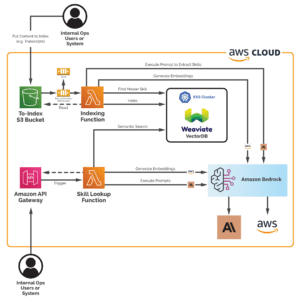
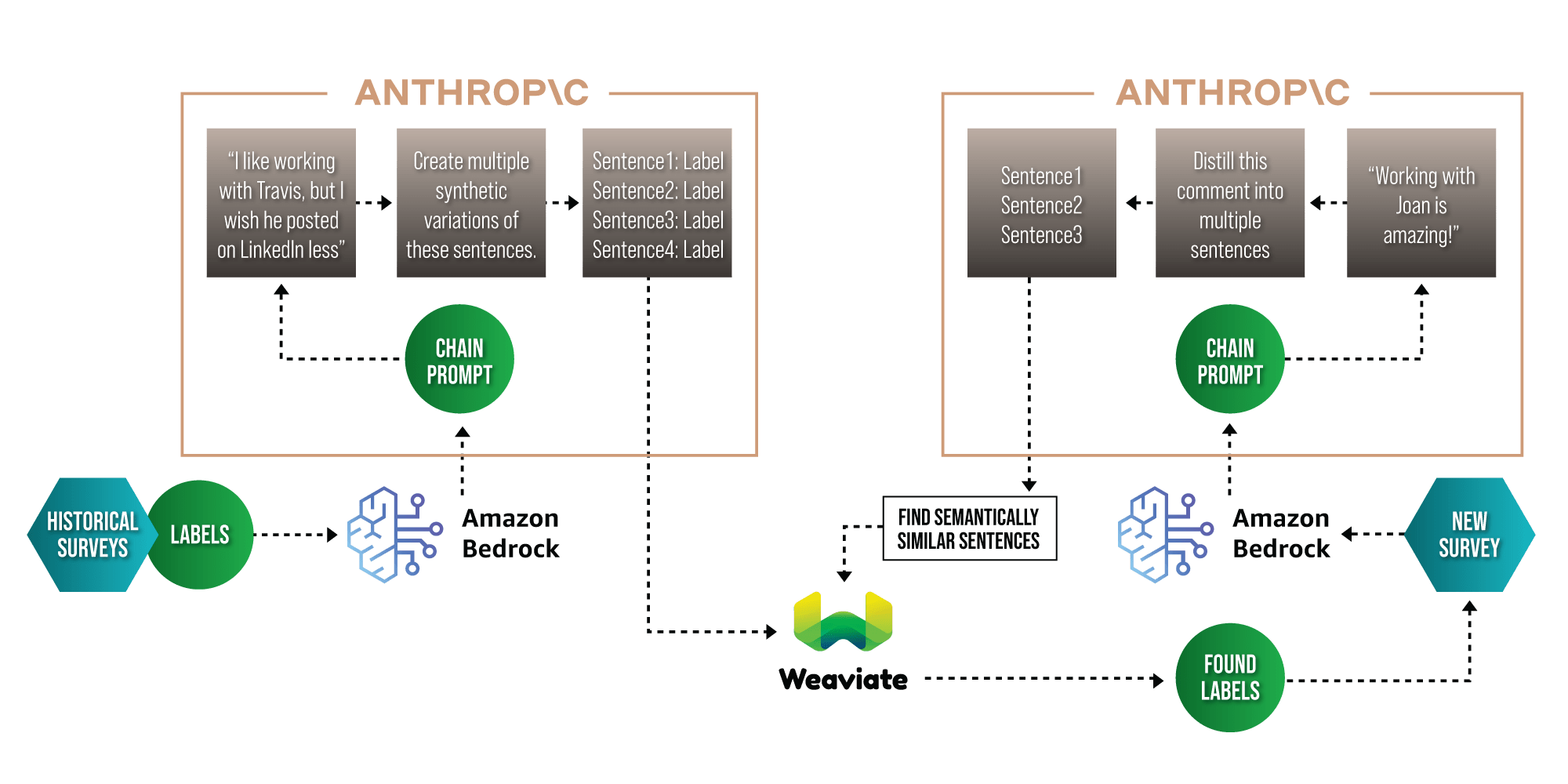
  • Implementation of an AI-powered vector store using Weaviate to maintain detailed employee profiles, skills, and project history
  • Integration with Amazon Bedrock to access state-of-the-art language models for intelligent matching algorithms
  • Development of custom workflows in Tailwinds for automated project staffing and conflict resolution
  • Real-time availability tracking and proactive scheduling conflict identification
  • Machine learning models trained on historical project data to optimize resource allocation
Transforming the Customer Experience

The implementation of the Tailwinds solution revolutionized LawDocsXpress’s workforce management processes, enabling them to maintain their high service standards while significantly improving operational efficiency.

“Tailwinds has revolutionized how we manage our workforce. The AI-powered solution has not only streamlined our operations but has also enabled us to maintain our high standards of service while scaling our business efficiently. We’ve seen significant improvements in our ability to match the right professionals with client projects, ultimately leading to better outcomes for everyone involved.”

– Catherine Massey, Founder & CEO, LawDocVentures

Key Results
  • 40% reduction in time spent on project staffing and resource allocation
  • 35% improvement in overall resource utilization
  • 28% decrease in scheduling conflicts
  • 45% faster response time to urgent client requests
  • 25% increase in concurrent project capacity

Have a Question? Contact Us Today.


Mednet

Mednet provides an eClinical platform to design and implement clinical trials through their flagship platform, iMednet. Mednet was looking for an AI solution to generate clinical forms.  In partnership with Innovative Solutions, Mednet was privy to a demonstration of an AI-powered document processing solution using Tailwinds. The demonstration showed promise of improving their clinical trial documentation workflow.

Business Objectives
  • Automate the extraction and structuring of information from PDF documents into JSON payloads
  • Implement intelligent validation processes for medical form generation
  • Reduce manual data entry while maintaining accuracy
  • Establish a scalable solution for future growth
The Challenge

Mednet sought to implement an AI solution to generate forms removing the need for their users to do so manually. Additionally, Mednet required a solution that could scale with their growing business while maintaining consistent performance and accuracy across all types of clinical trial documentation.

The Solution

Innovative Solutions implemented a comprehensive AI-powered document processing solution leveraging Tailwinds, Amazon Bedrock, and IBM watsonx Assistant. The solution includes:

  • Tailwinds AI workflow automation platform for orchestrating the document processing pipeline
  • Integration with Amazon Bedrock and Anthropic’s Claude large language model for advanced document understanding and data extraction
  • IBM watsonx Assistant implementation for human-in-the-loop review and validation
  • Custom validation rules engine ensuring compliance with medical standards
  • Seamless integration with Mednet’s existing Salesforce infrastructure

The solution provides an intelligent document processing workflow that automatically extracts relevant information from PDFs, structures it into standardized JSON payloads, and facilitates human review when necessary. The system uses advanced AI models to understand complex medical terminology and ensure accurate data capture.

Transforming the Customer Experience

The implementation of Tailwinds would have the potential to revolutionize Mednet’s document processing workflow, enabling them to handle increasing volumes of clinical trial documentation with greater efficiency and accuracy.

“Seeing the concept created through Tailwinds allowed us to imagine its possibilities if employed.”
– The Mednet team

Key Results
  • 5% potential reduction in document processing time
  • 10% potential increase in operational efficiency
  • 20% decrease in manual review requirements

Have a Question? Contact Us Today.


ParkStash

ParkStash, a leading provider of digital parking management solutions, serves various industries including multifamily residential communities, universities, and commercial properties. Their platform combines digital permits, automated enforcement, and parking access control to streamline parking operations. Looking to enhance their B2B SaaS offering, ParkStash sought to integrate advanced AI capabilities to automate key processes and improve customer experiences.

By partnering with Innovative Solutions and using its Tailwinds software, ParkStash transformed their platform with intelligent automation, resulting in enhanced operational efficiency and improved customer satisfaction. The implementation of AI-powered features has positioned ParkStash at the forefront of parking management innovation.

Business Objectives
  • Automate the permit reservation process to reduce manual processing time
  • Implement AI-driven support ticket resolution for faster customer service
  • Streamline enforcement processes through intelligent automation
  • Enhance overall user experience for property managers and end-users
The Challenge

ParkStash faced increasing demand for their digital parking management solution, but manual processes were limiting their ability to scale efficiently. Property managers were spending significant time processing permit applications and responding to support tickets, while enforcement teams needed a more streamlined way to add additional enforcers, access historical permit data, and coordinate their activities.

The company recognized that maintaining their high customer satisfaction rates and impressive ROI metrics would require intelligent automation to handle routine tasks.

The Solution

Innovative Solutions used Tailwinds, its AI workflow automation platform, to build AI software running on Amazon Bedrock using IBM watsonx Assistant, resulting in four enhancements to ParkStash’s application:

Permit Reservation Automation

  • Integrated Amazon Bedrock with Claude to process natural language permit applications
  • Implemented intelligent form filling and validation
  • Created automated approval workflows based on predefined rules

AI-Powered Support System

  • Enhanced the ticket routing and response system leveraging IBM watsonx Assistant software running on AWS
  • Integrated historical data analysis for context-aware responses
  • Implemented automated follow-up and satisfaction tracking

Enforcement Automation

  • Utilized watsonx Assistant to assist users with enforcement scheduling and coordination
  • Implemented automated permit history analysis
  • Created real-time notification systems for enforcement teams
Transforming the Customer Experience

The implementation of Tailwinds has revolutionized ParkStash’s operations and service delivery. Property managers now spend significantly less time on routine tasks, while end-users enjoy a more seamless parking management experience.

“Tailwinds adds AI to our industry-leading parking management platform. What used to take hours now happens in minutes, and our customers are thrilled with the intelligent automation, and we’re thrilled with the efficiencies this provides.”

– Sameer Saran, CEO

Key Results
  • 50% reduction in permit processing time
  • 70% decrease in support ticket resolution time
  • 60% improvement in enforcement team efficiency
  • 30% increase in platform scalability

Have a Question? Contact Us Today.


Stevens Water Monitoring Systems

Stevens Water Monitoring Systems, established in 1911, stands as the industry’s most senior water monitoring company, providing cutting-edge environmental data acquisition systems through its MEASUREMENTS TO MIND® (M2M) platform. Stevens designs, manufactures, and integrates environmental data acquisition systems with expertise in water resources, soil moisture, and matric potential.

As turf maintenance practices are modernized across the industry, Stevens partnered with Innovative Solutions to integrate generative AI capabilities into their sensor data analysis system. By implementing Tailwinds, powered by Amazon Bedrock and IBM watsonX Assistant, Stevens transformed their turf maintenance insights platform into an intelligent system capable of providing real-time, actionable recommendations.

Business Objectives
  • Integrate sensor data with generative AI to provide actionable turf maintenance insights
  • Develop an intelligent querying system for turf health monitoring
  • Create predictive maintenance capabilities for proactive turf care
  • Enhance visual insights delivery through advanced analytics
  • Streamline the interpretation of complex environmental data
The Challenge

Stevens Water Monitoring Systems faced increasing demand from their clients, particularly in the golf course and sports facility management sector, for more sophisticated and predictive turf maintenance insights. Traditional sensor data, while valuable, required significant expert interpretation to translate into actionable maintenance recommendations.  The company needed to transform their vast amounts of sensor data into easily digestible insights that facility managers could act upon instantly. Additionally, they sought to incorporate professional turf care knowledge, such as PGA documentation, into their analysis to provide context-aware recommendations.

The challenge lay in creating a seamless interface between their sophisticated M2M sensor platform and modern AI capabilities while maintaining the reliability and accuracy their clients had come to expect over their century-long history.

The Solution

Innovative implemented a comprehensive solution using Tailwinds, their AI workflow automation platform, to bridge the gap between sensor data and actionable insights. The solution architecture leverages several key technologies:

  • Amazon Bedrock for secure and scalable AI model deployment
  • IBM watsonX Assistant for natural language chat interface
  • Amazon Quicksight for advanced visualization capabilities
  • Tailwinds platform for AI workflow automation and integration.  Learn more about Innovative Tailwinds

The solution integrates real-time sensor data from Stevens’ M2M platform with contextual information from professional turf care documentation. This combination allows for intelligent analysis that considers both current environmental conditions and established best practices.

Transforming the Customer Experience

The implementation of Tailwinds has revolutionized how Stevens’ clients interact with environmental data. Facility managers can now receive immediate, AI-powered insights about turf conditions and specific maintenance recommendations through a natural language interface.

“The integration of AI into our M2M platform has transformed how we deliver value to our clients. Our customers now have insights that help them prevent issues before they become visible on the ground. What used to take hours of expert analysis can now be accessed instantly through natural language and successfully blends cutting-edge AI technology with our century of experience.”

– Scott South, CEO

Key Results
  • 30% reduction in time spent analyzing environmental data
  • 40% improvement in early detection of potential turf health issues
  • 25% forecasted decrease in water usage through optimized maintenance scheduling
  • 15% increase in client satisfaction through maintenance recommendations, increased data visibility, and turf-health related issue reduction

Have a Question? Contact Us Today.


Download

  • This field is for validation purposes and should be left unchanged.