
There are the three factors that you have to choose from when protecting your systems and data. Those factors are:
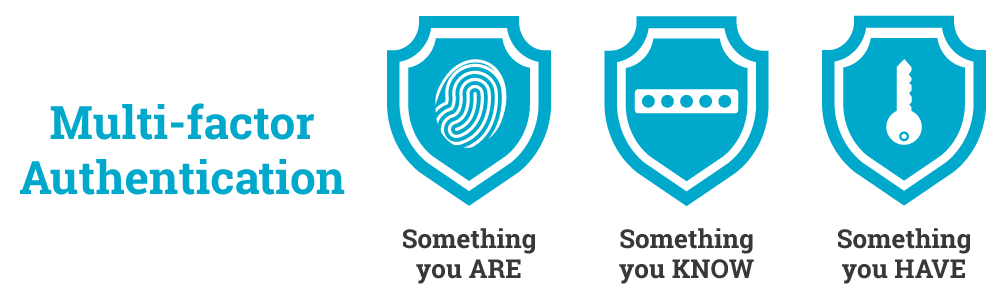
Traditionally, we all have been using just the something you know factor with our usernames and passwords that we use day-in and day-out. The problem with only using this method in various situations such as using a VPN, is that passwords can be guessed or easily compromised especially if you do not have diligent password rules in place.
The something you are factor can be effective but it has been proven repeatedly, that face-recognition, retina scanning and even fingerprint access comes with its own set of issues. This is also the highest cost solution and the most unreliable as well.
The last factor is something you have. This can come in the form of a key fob that gives you a timed code to input after your traditional password or a smartphone app that will give you a temporary code so you can gain access to critical systems securely.
Multi-factor authentication is picking two of three options listed above. Usually, the first factor will be the something you know factor in the form of a username and password. I highly recommend your second factor to be something you have. Why? It is a low-cost and effective solution helping protect the pathway into your entire environment.
The other major benefit in multi-factor authentication is the one that people typically do not notice right way. It makes your organization more efficient by ensuring that systems/applications are not compromised.
Contact me today at (585) 292-5070 x278 if you are interested in raising your security posture by going to a two-factor authentication solution for your critical data and applications.
Contact Jim Nelson Today! Learn more about our Information Security Services